
Are you scraping your kitchen waste into the garbage? It may not seem problematic, but food waste trapped in landfills doesn’t compost - it rots. Each year, 30–40% of food in the U.S. goes uneaten and ends up in landfills, where it contributes to the third-largest source of human-caused methane emissions. Methane is 25 times more potent than carbon dioxide in driving climate change. The good news? Home composting can help, and Nancy Schafer, a member of Orcas Island’s Zero Waste Committee through ORS/The Exchange, is ready to get you started.
Schafer leads composting workshops at The Grange. Attendees learn best practices for starting (or improving) home composting. Schafer covers topics including maintaining a healthy nitrogen/carbon balance, where to place your bin, and ways to use the nutrient-rich material you create.
Participants leave with a composting bin, new community connections, and an instructional guide authored by Schafer.
“Keeping organics out of the landfill is something we all have the power to do, and it makes a big difference,” said Schafer.
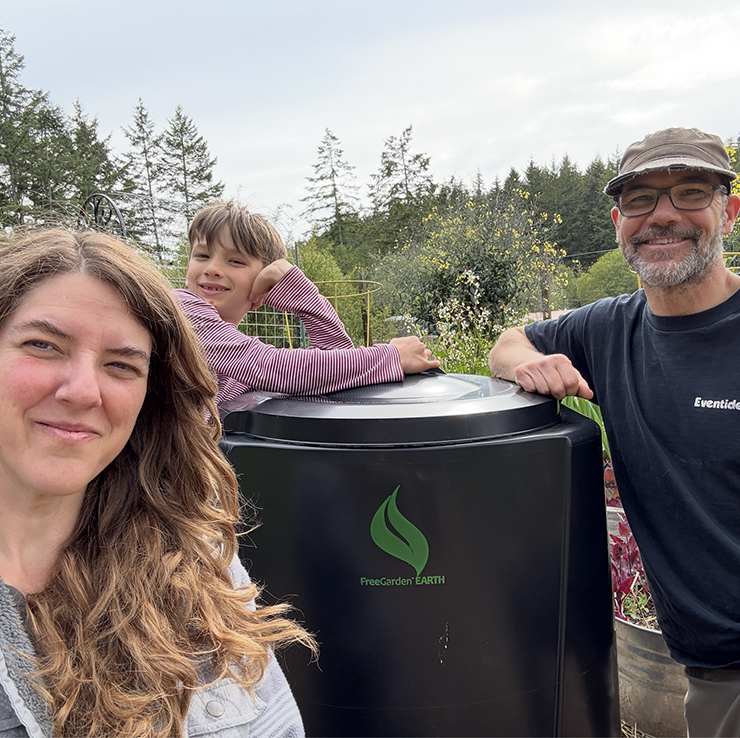
[Photo: The Curcio-Galloway family and their new composting bin from the workshop.]